
Sugar alcohols explained — and every sweetener that isn't sugar
Sugar alcohols are carbohydrates that taste sweet but are only partly digested, so they deliver fewer calories than sugar and raise blood glucose far less. On a U.S. label they sit inside Total Carbohydrate — never inside Added Sugars. Erythritol, xylitol, maltitol, and sorbitol are the ones you'll actually run into.
What sugar alcohols are
The chemical name is polyols, and the giveaway on an ingredient list is the -itol suffix. Most are made by hydrogenating a sugar: glucose becomes sorbitol, xylose becomes xylitol, maltose becomes maltitol. Erythritol is the outlier, fermented from glucose by yeast; sorbitol also occurs naturally in prunes and pears.
None contain ethanol — the "alcohol" refers to hydroxyl groups on the molecule. What the small intestine doesn't absorb reaches the colon, holds water, and ferments in gut bacteria, producing fewer calories, a smaller glucose response, and more gas.
Sugar alcohols compared: calories, sweetness, and blood sugar
The FDA assigns each polyol its own caloric value instead of the flat 4 calories per gram used for sugar.
| Sweetener | Calories/gram (FDA) | Sweetness vs. sugar | Glycemic index (approx.) | Typically found in |
|---|---|---|---|---|
| Table sugar (reference) | 4.0 | 100% | ~65 | everything |
| Erythritol | 0.2 | 60–70% | 0 | stevia and monk fruit blends |
| Xylitol | 2.4 | ~100% | ~13 | dental gum, mints |
| Maltitol | 2.1 | 75–90% | ~35 | sugar-free chocolate, cookies |
| Sorbitol | 2.6 | ~60% | ~9 | sugar-free gum, cough syrup |
| Mannitol | 1.6 | 50–70% | ~0 | chewable tablets, dusting powder |
| Isomalt | 2.0 | 45–65% | ~2 | hard candy, lozenges |
Published glycemic index values for polyols come from small studies and vary by source, so read that column as a ranking, not a measurement. Erythritol is effectively inert, xylitol and sorbitol are mild, and maltitol behaves like a weakened sugar. Maltitol syrup and other hydrogenated starch hydrolysates carry the group's highest FDA value, 3.0 calories per gram.
The laxative threshold, and why maltitol gets blamed
Unabsorbed polyols are osmotically active — they pull water into the intestine and feed colonic bacteria, producing gas, cramping, and loose stools past a personal threshold. The FDA requires the statement "Excess consumption may have a laxative effect" on foods whose foreseeable daily intake reaches 50 grams of sorbitol or 20 grams of mannitol.
Maltitol carries no mandated U.S. threshold statement and still draws the most complaints. The reason is dose: maltitol crystallizes and melts like sucrose, making it the workhorse of sugar-free confectionery, and one serving of sugar-free chocolate can deliver 20 to 30 grams.
Erythritol is the exception: its molecule is small enough that roughly 90% is absorbed in the small intestine and excreted unchanged in urine, so little reaches the colon, though large single servings can still cause nausea. Polyols are also the "P" in FODMAP; sorbitol and mannitol are usually restricted first.
How sugar alcohols show up on a nutrition label
Three lines matter, and they nest. Total Carbohydrate is the outer number and includes sugar alcohol grams. Total Sugars counts only free mono- and disaccharides, so polyols are excluded — and so is Added Sugars, the line the published guidelines are written against.
The "Sugar Alcohol" line itself is voluntary in the U.S., mandatory only when the label makes a claim about sugar alcohols or about sugars in a product containing them. That's how a bar can show 22 g of carbohydrate, 0 g of added sugar, and no polyol breakdown at all. Polyols also qualify for the FDA-authorized "does not promote tooth decay" claim.
"Net carbs" isn't an FDA-defined term. Subtracting fiber and all sugar alcohols is an industry convention, and since maltitol demonstrably raises blood glucose, subtracting the full amount overstates the case. For the rest of the panel, see how to read a nutrition label.
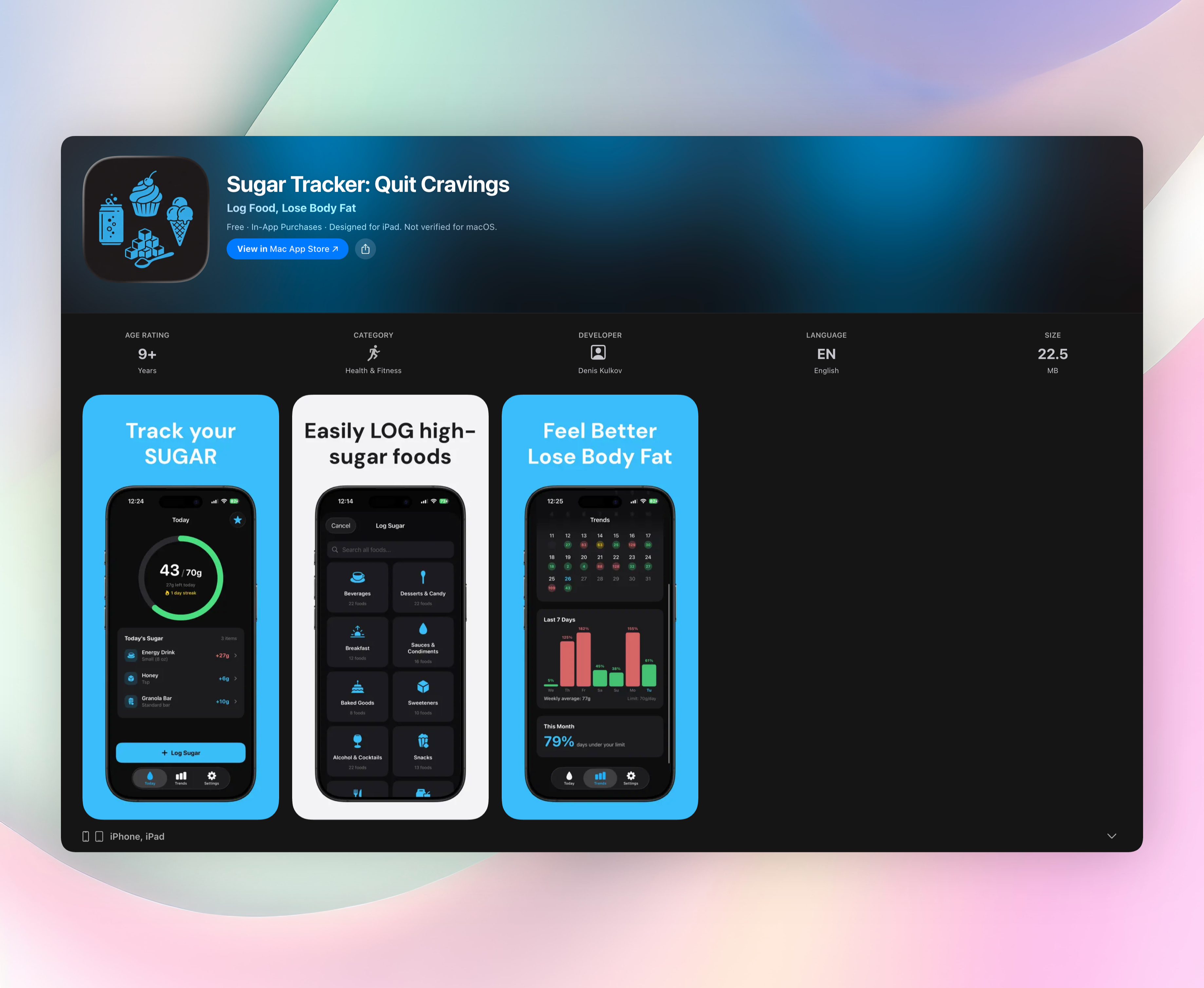
The practical consequence: polyols never touch your added-sugar budget. The American Heart Association's guideline is 25 grams a day for women and 36 for men, and that daily added sugar limit is measured against the Added Sugars line alone. Sugar Tracker, an added-sugar tracking app for iPhone, counts only that line, so a sugar-alcohol-sweetened bar leaves the day's allowance exactly where it was.
Stevia and monk fruit — and why both are mostly erythritol
Stevia sweeteners are purified steviol glycosides from the leaves of Stevia rebaudiana, roughly 200 to 350 times sweeter than sugar; only high-purity extracts are recognized as safe in the U.S., not whole-leaf stevia or crude extracts. Monk fruit sweeteners come from mogrosides in Siraitia grosvenorii, land in a similar 150-to-250-times range, and taste rounder. Neither contributes digestible carbohydrate, which puts both outside the added versus natural sugar distinction entirely.
Here's what confuses every comparison: at 200-plus times sweetness, a teaspoon-equivalent of pure extract weighs a few milligrams, nothing you can scoop or bake with. Cup-for-cup retail products are therefore bulked, almost always with erythritol, and a supermarket "stevia" baking blend is usually more than 95% erythritol by weight. That's why erythritol vs stevia and monk fruit vs stevia keep collapsing into the same argument — you're often comparing two erythritol products that differ only in a trace sweetener. Check the label, not the name on the front.
The approved artificial sweeteners
The approved high-intensity sweeteners each carry an Acceptable Daily Intake set far below any dose showing effects in animal studies. Sucralose, roughly 600 times sweeter than sugar and heat-stable, has an ADI of 5 mg per kg of body weight. Aspartame, about 200 times sweeter, breaks down under heat and requires a phenylalanine warning for people with PKU; its ADI is 50 mg/kg in the U.S. and 40 in Europe. Acesulfame potassium matches aspartame's sweetness at an ADI of 15 mg/kg and is usually blended with sucralose or aspartame for a rounder taste.
Are sugar alcohols bad for you? What the research shows
A 2023 study in Nature Medicine found high circulating erythritol associated with major adverse cardiovascular events in patients already undergoing cardiac evaluation, with lab work in the same paper showing increased platelet reactivity. The caveat matters — the body also produces erythritol endogenously, so raised blood levels may mark existing metabolic dysfunction rather than cause it. The same research group later reported comparable associations for xylitol. No regulator has changed either sweetener's status on that basis.
The World Health Organization's 2023 guidance recommends against using non-sugar sweeteners for weight control or disease-risk reduction. Two details get dropped: the recommendation is conditional, drawn from low-certainty evidence with likely reverse causation, and it excludes sugar alcohols outright, since polyols contain calories and aren't classed as non-sugar sweeteners.
Aspartame was classified in 2023 as possibly carcinogenic to humans, Group 2B, by the International Agency for Research on Cancer — the same tier as aloe vera extract and pickled vegetables. IARC judges whether evidence of hazard exists, not dose; the joint WHO/FAO expert committee reviewed the same evidence and reaffirmed the existing intake figure.
No approval has been withdrawn, and evidence of harm at ordinary intakes is weak and largely observational — so is the evidence that substitution improves long-term outcomes. The best sugar substitutes are the ones a person tolerates digestively and doesn't compensate for later in the day.
FAQ
Do sugar alcohols count as added sugar?
No. Their grams fall inside Total Carbohydrate but are excluded from Total Sugars and Added Sugars, so they don't count against the AHA's published guideline — though they still contribute calories and, with maltitol, some glucose response.
Is stevia safe?
Regulators worldwide accept high-purity steviol glycosides, with an acceptable daily intake of 4 mg per kg of body weight as steviol equivalents, a level ordinary use doesn't approach. Whole-leaf stevia and crude extracts are not approved as food additives in the U.S.
Are artificial sweeteners bad for you?
At approved intakes the regulatory answer is no, and ADIs carry a safety factor of roughly 100-fold. The unsettled question is whether substituting them for sugar improves weight or metabolic outcomes over years — what the WHO's conditional guidance addresses.
Which sugar alcohol is easiest on the stomach?
Erythritol, by a clear margin, since most of it is absorbed before reaching the colon. Maltitol and sorbitol draw the most complaints, largely because sugar-free confectionery delivers them in large doses. Tolerance is individual.
Free Sugar tools
- A1C CalculatorUse this a1c calculator to convert an A1C percentage to estimated average glucose, or enter average glucose to estimate A1C in both common units.
- Banana Carb and Sugar CalculatorFind how many carbs are in a banana by size, quantity and ripeness. Compare total and net carbs, sugar, fibre, calories and carb exchanges.
- Blood Sugar Level ChartEnter a blood glucose reading, unit and test context to see the published range, a chart position and the same value in the other unit.
- Blood Sugar Unit ConverterConvert blood sugar between mg/dL and mmol/L in seconds, with a two-column reference table for common readings.
- Daily Sugar Limit CalculatorEstimate a daily added-sugar limit in grams and teaspoons from your age, sex and calorie target.
- Sugar Cube Grams CalculatorFind how many grams of sugar are in a sugar cube by entering the number of cubes and grams per cube. Get the total sugar and an optional teaspoons equivalent.
- Sugar Grams to Teaspoons ConverterHow many grams is a teaspoon of sugar? A level teaspoon of granulated white sugar weighs about 4.2 g, while nutrition labels round it to 4 g. Convert either way, pick your sugar type, and see how the result compares with the American Heart Association daily added-sugar limits.